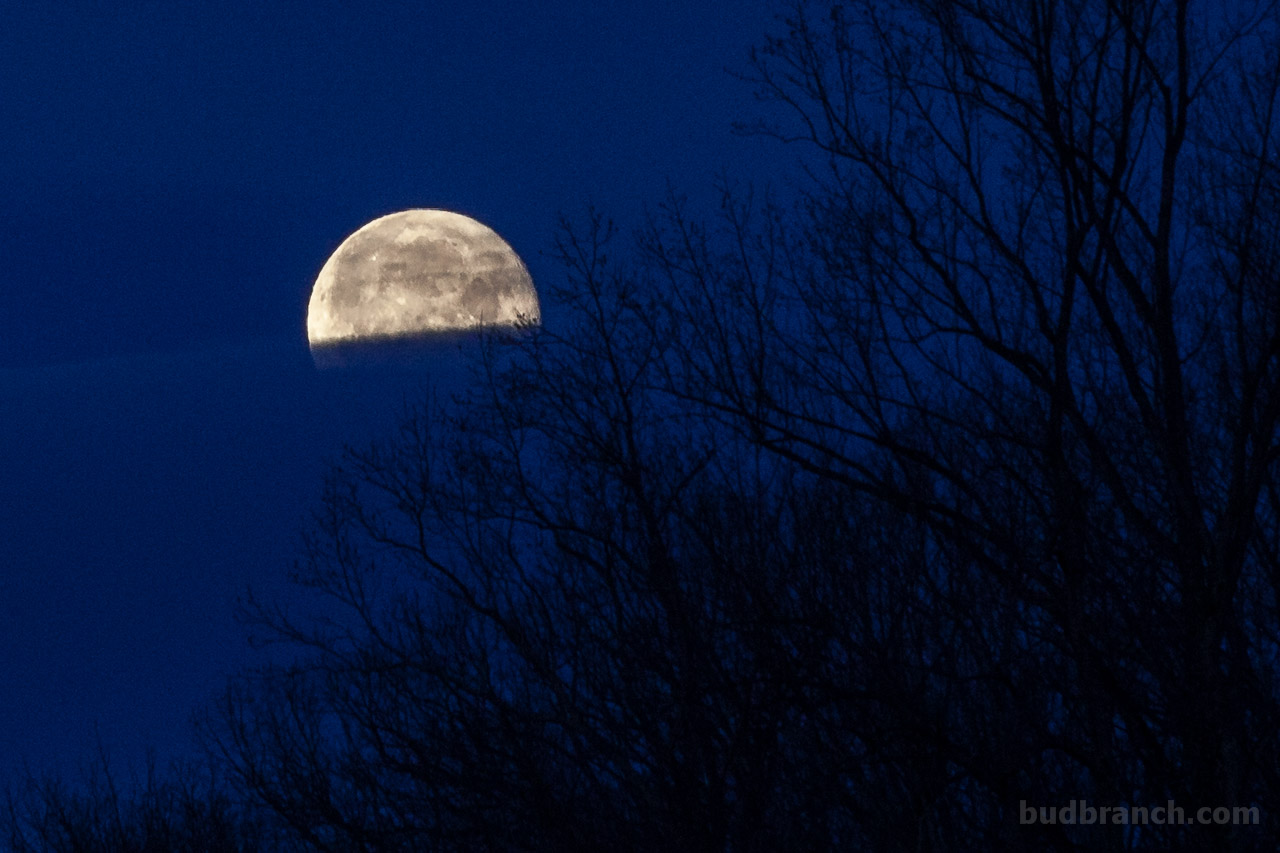
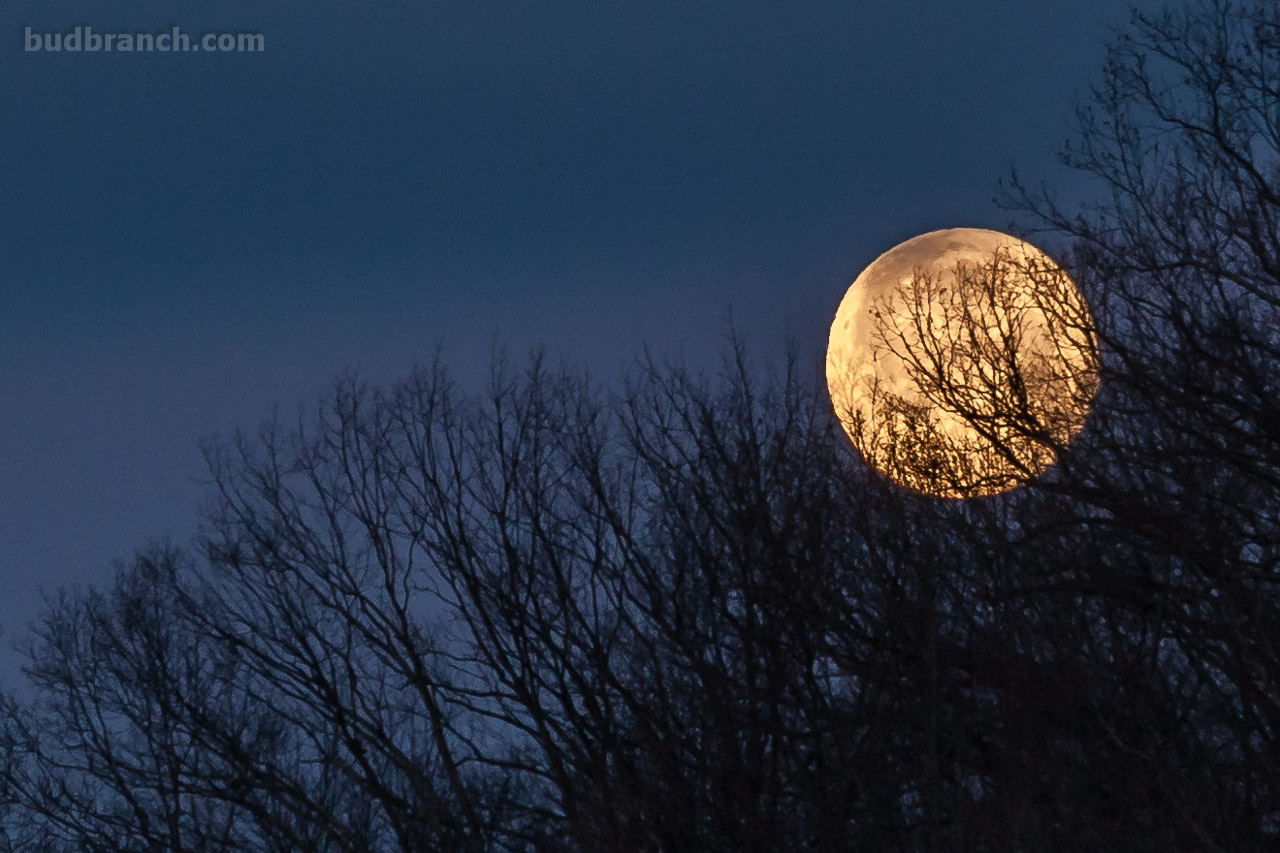
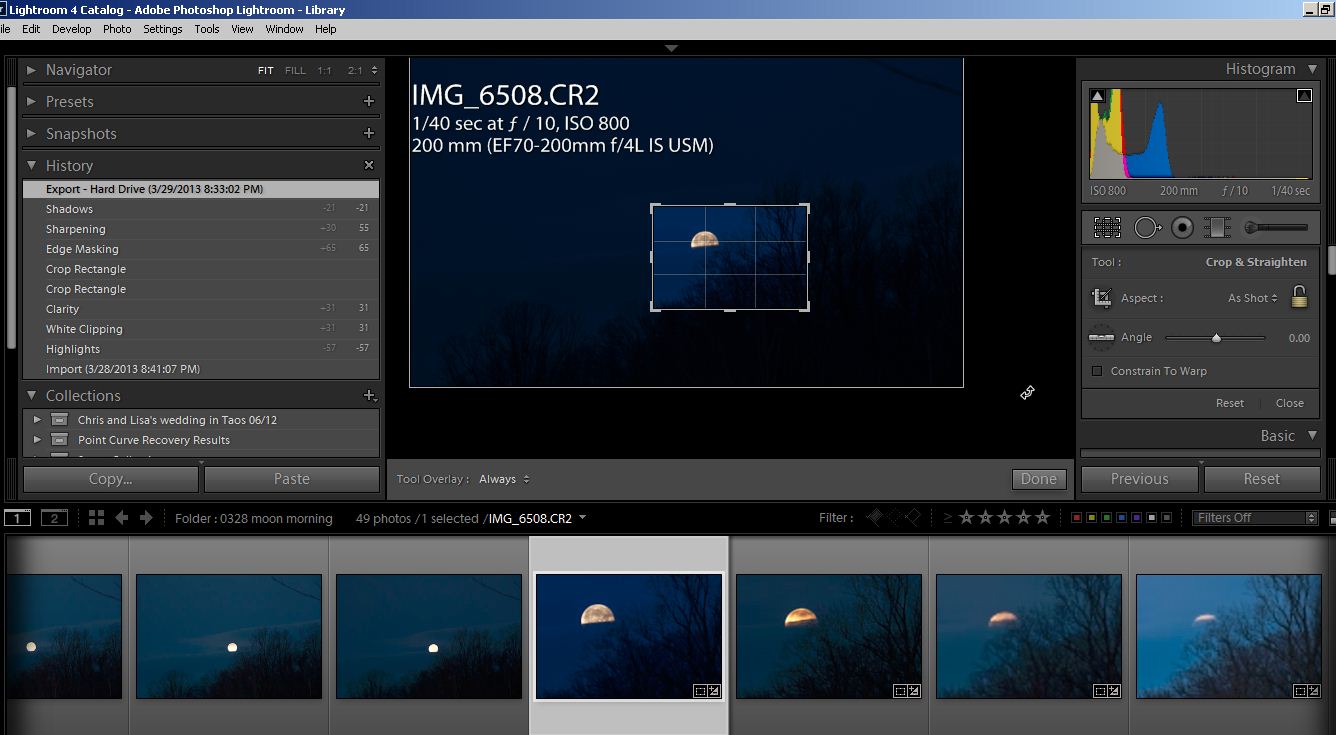
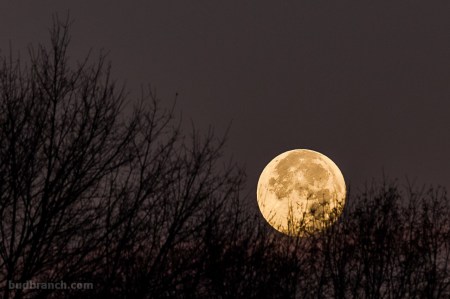
Nice Moon compositions are possible at dawn or dusk – other times it is just too bright (it’s like trying to image a headlight at night). The first one of these is an exception: it was rising in the east an hour after sunset, but there were clouds that dimmed it and provided a light, even background. All these were all shot at 200mm off a tripod. I took a lot of care with focus and took measures to eliminate camera-shake. The images were all cropped-in severely to achieve the “big Moon” composition (see the last frame). And note that I made over 70 frames in order to collect a few “keepers”. -BB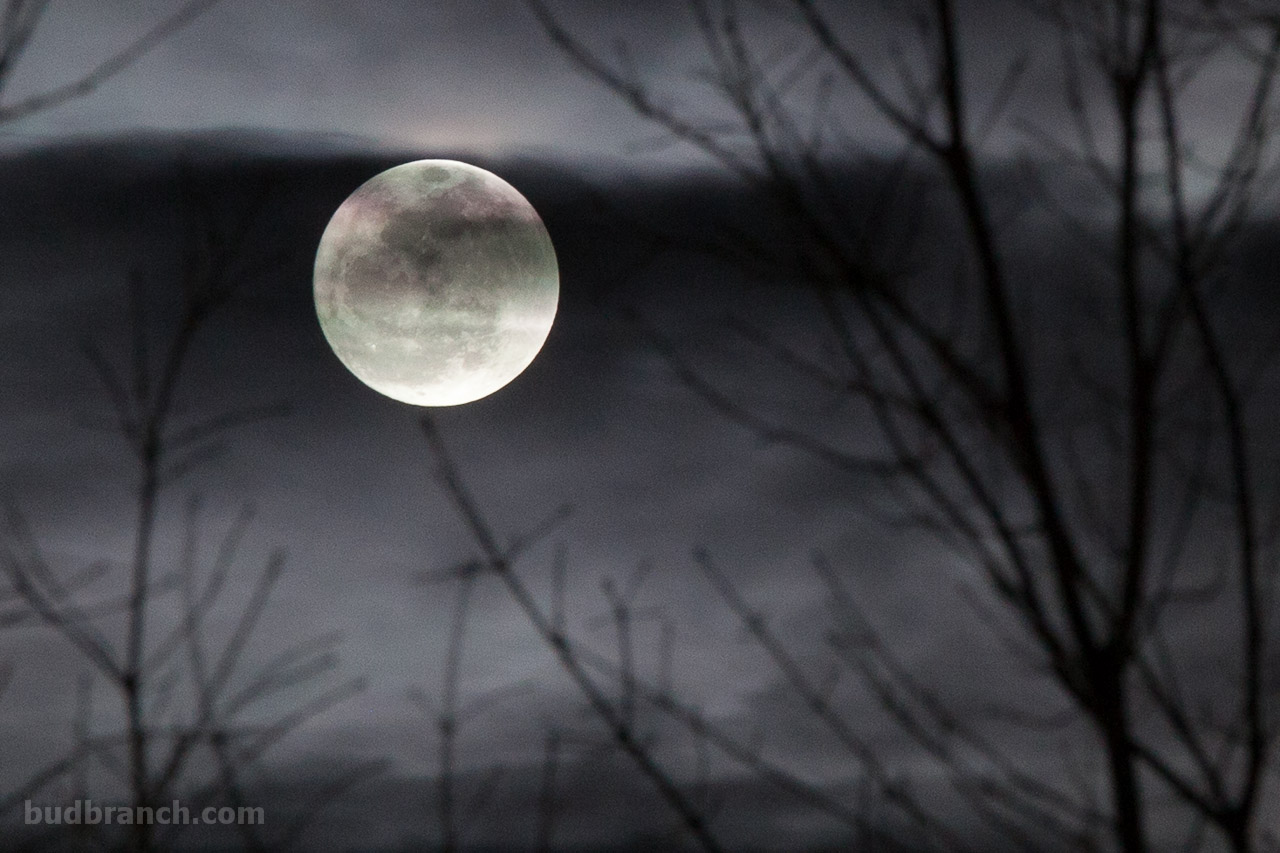
Archive for the sky Category
Moonset/Moonrise
Posted in 5DMII, Available Light, sky on March 30, 2013 by budbranch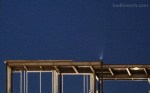

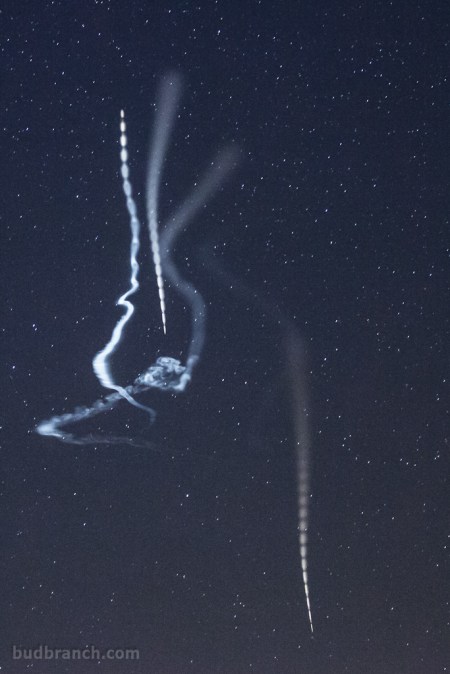
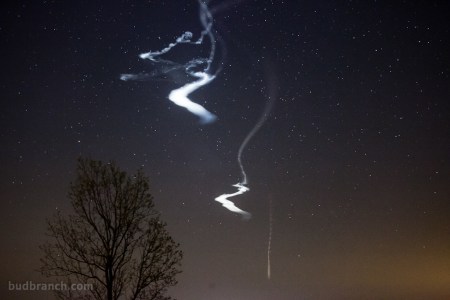
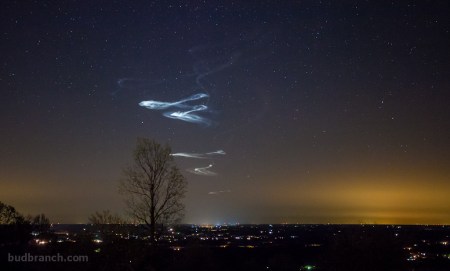
NASA’s ATREX Experiment
Posted in 5DMII, Astrophotography, Long exposures, sky on March 27, 2012 by budbranch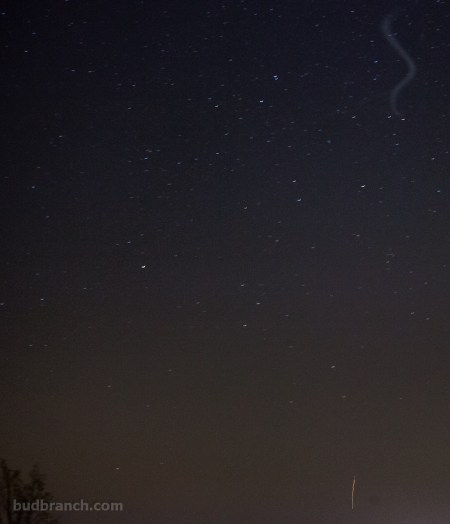
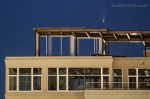
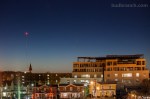
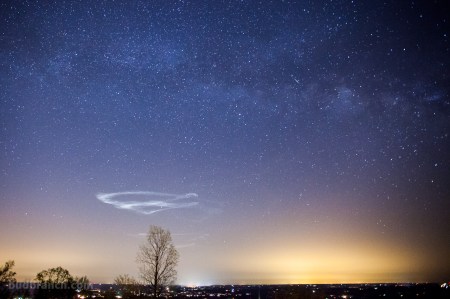 Thanks to Will Lyster for obtaining access to Brown’s Mountain for the purpose of photographing NASA’s ATREX experiment – what a cool event!
Moon, Jupiter, Venus, stars, and aircraft
Posted in 5DMII, Available Light, Composite, sky on February 29, 2012 by budbranchThis is a composite of 548 night sky photos taken over the span of 4 hours last week. You can easily see Jupiter, Venus, and our Moon setting lower right. Many aircraft light streaks were included (each exposure was 20 seconds, so any aircraft wandering through was rendered as a streak). The light at the bottom was created by the chance return of a car to the parking lot.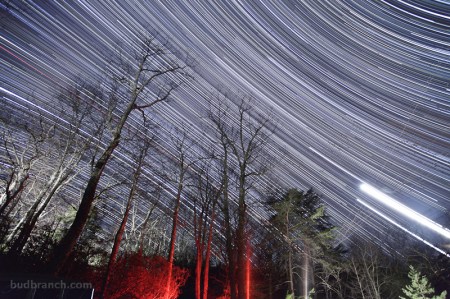
The Quadrantids (Every January 4th)
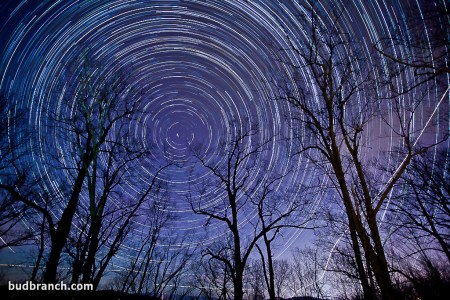
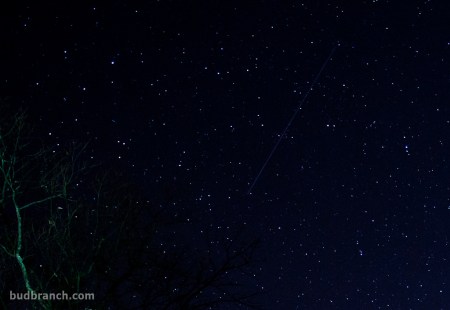
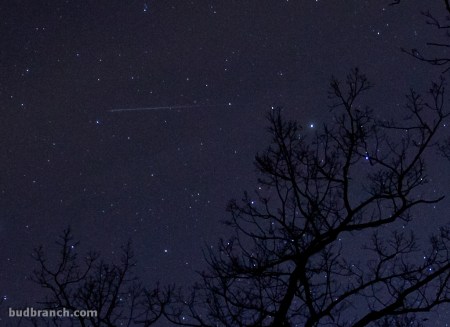
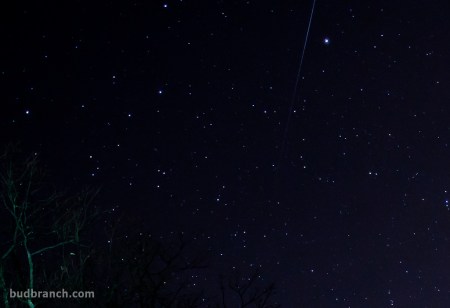
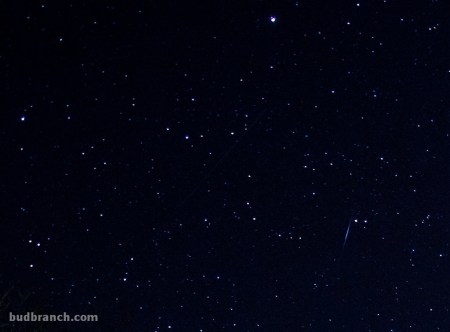
Posted in 5DMII, Long exposures, sky on January 6, 2012 by budbranchI read that the Quadrantids meteor shower early Wednesday morning averaged 2 per minute – I didn’t capture nearly that many, maybe because I was looking out over Charlottesville. Anyway, I got my share! Notice in the last frame, there are TWO! (click into the images to make them full-screen…) The circular star-trail image was assembled from all the frames taken between 2:20 and 5:30AM. Since the Quadrantids radiate from a point in the Northern sky, all my frames included the star Polaris, around which all the stars visible in the Northern Hemisphere seem to rotate.
Orion Sets For The Last Time In 2011
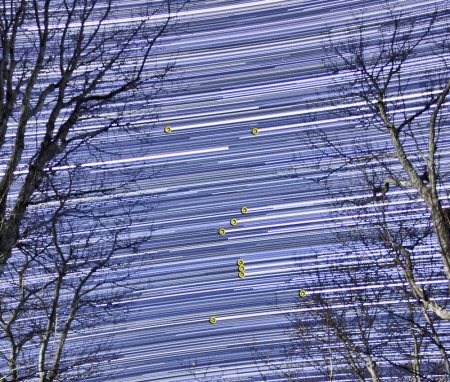
Posted in 5DMII, Available Light, Long exposures, sky on January 1, 2012 by budbranchThis was composited from 244 30-second exposures, f/4 ISO1600 taken between 10PM and midnight. Occasional traffic painted the trees with interesting light. At the center of the frame you can see the three, equally spaced bright stars that form Orion’s belt, and the light smear below made by his sword, (I’ve included a visual aid below…) Composite images like this are only possible because of Startrails software by Achim Schaller – THANKS Achim!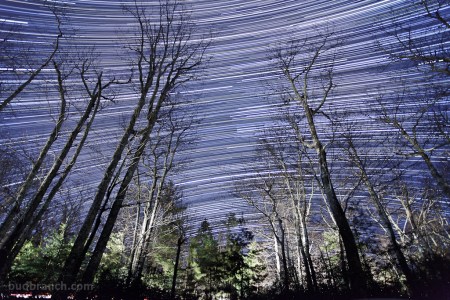
Cold Moon
Posted in 5DMII, Available Light, sky on December 12, 2011 by budbranchI caught this just at dusk…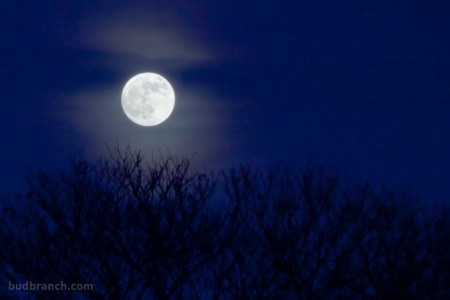
General Assembly: Occupy Charlottesville
Posted in Available Light, Canon S95, Long exposures, Point-and-shoot, sky on November 10, 2011 by budbranchI and my banjo attended the proceedings at Lee Park yesterday. I didn’t bring my grand-dog Mya. She was probably disappointed not to represent the “99 paw-cent”! (thanks Jeremy!)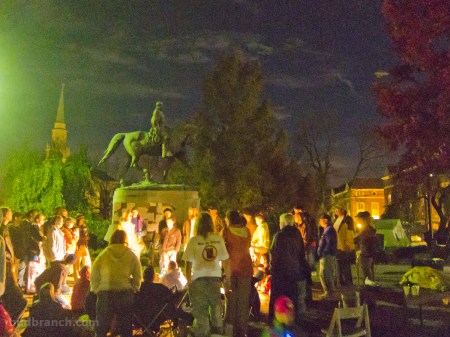
International Space Station
Posted in 5DMII, Long exposures, sky on November 6, 2011 by budbranchThere is an Android app that keeps track of when the ISS and other notable satellites will be visible in the night sky. Saturday night the International Space Station’s orbit carried it 240 miles over central VA as the sun was setting – it took about 3 minutes to cross from horizon to horizon. I made 15 or so 15 second exposures and composited 6 to make this image (the moon was an unexpected bonus). There is a crew of 3 up there, and 3 more are headed there this month. The ISS has been occupied continuously for more than TEN YEARS! Cool.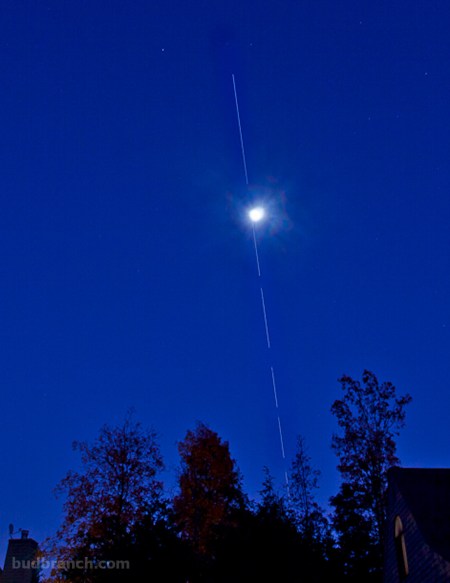

 Bud Branch